Blog

  • 9 Reasons Why You Must Keep Going (When the World Feels Heavy) 

    At Hope is Everything, we understand those moments in life when everything feels pointless. When it feels like nothing matters and there is no goal or sense to whatever is going on. Part of experiencing grief, illness, loss, and challenge is getting that feeling of numbness and heaviness. And we, as a community, get it. We advocate for healthy approaches and mindsets that can make life easier in rough times, and we often talk about them because we consider them an important part of promoting mental health. 

    We collected some ideas that make our hearts softer, not by avoiding hard feelings but by embracing them. Even though they might sound cliché, they are important to hear once in a while to remind us that hard times are a natural, even necessary, part of life. 

    1. Not everything has a lesson, and that’s okay. Even though life always finds a way to show you light through the dark, life has plans that can feel painful and unfair, and sometimes, there isn’t enough reason or explanation you can find that will make you feel better than just allowing your body to feel what it has to feel for as long as it aches. 
    2. There is always a cup of something ahead. The cup of tea that waits for you every morning. That hug from your partner that warms up your heart. The small talk you are going to have with the farmers’ market lady who lights your day up. The book you are going to read. What awaits you is part of believing that life always has something to offer, something small but immensely joyful. 
    3. You deserve to see what happens. You deserve second, third, and fourth chances. 
    4. There is growth happening even if you can’t see it or comprehend it. Life is a spiral, and transformation can look messy, and that usually indicates a good sign.
    5. You keep the door of possibility alive. When you keep going, you get to experience things you did not think were possible for you. You get to give life the benefit of the doubt, and what comes right after you do that is that it surprises you. 
    6. People care about you. Another human being is looking out for you, even if you don’t remember. We get caught up in our own minds, forgetting the people who love us. One person is enough to feel cared for, and it does not matter if it is the barista you see every day, your mom, your sister, or your step-brother; the point is that always someone is going to believe the world is better because you are in it, and that is enough reason to keep going.
    7. People want the same thing you want: connection. Bell Hooks, in the book All About Love, shares that “knowing love or the hope of knowing love is the anchor that keeps us from falling into that sea of despair” and quotes Jack Kornfield: “the longing for love and the movement of love is underneath all of our activities”. We do things for the sole purpose of connecting, feeling a part of something or someone. Nobody is exempt from that.  
    8. There is only one you; no one has the same brain. No one sees things the way you see them, or thinks the way you do. It may sound overused or silly, but it is facts. We are individuals with particular ways of being, and we can be extremely different and, at the same time, similar enough to create connections. 
    9. You can always try again. You can get up and fail, and the world is not going to end. You can wake up and realize that there is no rule to follow or structure to accomplish, but just another opportunity to be as you are. Life will meet you there. 

    As Clarissa Pinkola says, and I quote, “If you have a deep scar, that is a door; if you have an old, old story, that is a door. If you love the sky and the water so much you almost cannot bear it, that is a door. If you yearn for a deeper life, a full life, a sane life, that is a door.”

    When you choose to see your pain as a threshold, life rewards you. Everytime. 

    To become a Hope Angel, please click here.  

    — Written by Ariadna Bermudez, Freelance Blog Writer
  • Girls’ Education In Nigeria/South Africa: What We See When We Choose To Look 

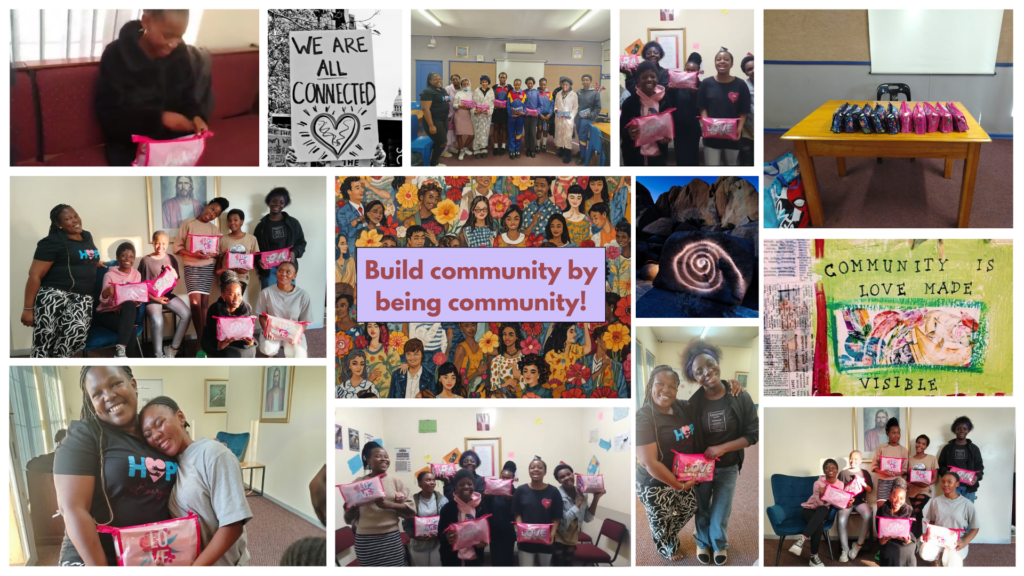
    One of our most powerful experiences at Hope is Everything: the visits to Nigeria and South Africa. We spent time with young girls in vulnerable communities and shared resources that opened the door for a healthier and more educated life. As we reflected on this experience, we wanted to share some facts about what life is like for women and young girls in Nigeria and South Africa, and why it is pertinent for organizations like ours to bring attention to these realities, as well as any other areas in the world where access to education and healthcare remains scarce. 

    Research That Showcases Realities

    According to statistics from UNESCO, “in 2018, the literacy rate of females aged 15 and above in Nigeria was only 52.65%, which was about 18.6% below the literacy rate for males aged 15 and above. Even though primary education is officially free and compulsory, about 10.5 million of the country’s children aged 5-14 years are not in school, disproportionately affecting more girls than boys.” Although the government has implemented measures to make education more accessible for women and girls than before, there is still a gap that shows the fact that the problem is not only policy-based but systemic.

    On the same note, an article by Sage Journals states that “a qualitative research carried out by Enyioko (2021), revealed factors such as religion, poor education among parents/guardians and poverty as the major challenges limiting female education in Nigeria.” This highlights the variety of factors that composes a system that frames women’s education as a “threat”, when research consistently shows the opposite. 

    In a Girls No Brides report, it was found that “A 2017 World Bank/ICRW study estimated that ending child marriage could generate Nigeria an additional USD7.6 billion in earnings and productivity.” Currently, 30.3% of girls in Nigeria marry or enter a union before age 18, and 12.3% marry before age 15.

    When We Choose To Look

    These are statistics that remind us of the importance of recognizing the power we hold as a community and organization when bringing support to any space. It is not only awareness of global issues and dynamics, but also a deep commitment to knowing that every heart touched is a contribution to a better world. One with more hope and love. 

    Being immersed in the realities that people in vulnerable communities face can be uncomfortable, as it exposes us to different ways of living that privilege usually (and naturally) does not allow us to see; however, this discomfort is necessary to bring meaningful and proper support when the opportunity arises. 

    For more information on how to contact us and be a part of Hope Is Everything, please click here. 

    a glimpse of our visit <3

    References

    Nwachukwu, C., & others. (2022). Underscoring the Relationship Between Education for Women and National Development in Nigeria. SAGE Open, 12(2). https://journals.sagepub.com/doi/10.1177/21582440221102429 

    United Nations Educational, Scientific and Cultural Organization. (2020, September 7). Lives resumed by education: The second-chance education for women and girls in Nigeria. UNESCO. https://www.unesco.org/en/articles/lives-resumed-education-second-chance-education-women-and-girls-nigeria 

    — Written by Ariadna Bermudez, Freelance Blog Writer
  • Meet Sarah: The Heart Behind Hope is Everything

    From Pain to Purpose

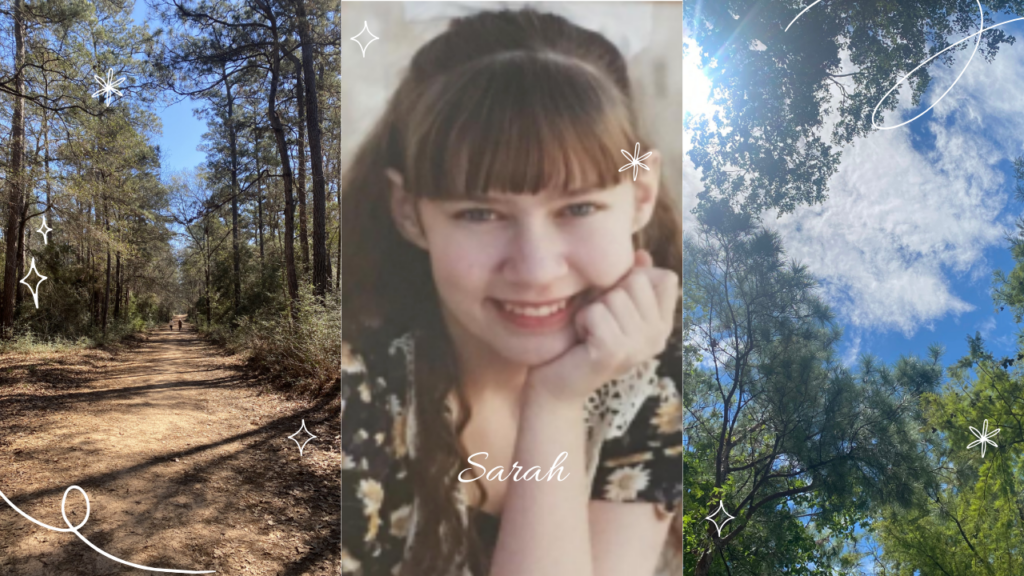
    As most of you might know (or not), Hope is Everything started thanks to Sarah Elizabeth: a beautiful girl who suffered from Cystic Fibrosis and left our terrestrial world in 1997. Debra McCarthy and Kenneth McCarthy, the founders of Hope is Everything and parents of Sarah, decided to create this space in honor of her and the values that held the family together when navigating the challenges of the illness, and lastly, the loss of Sarah. 

    From the beginning, it was apparent that Sarah’s coming to our world was intentional and magical in its own way. Debbie, her mom, knew long before she started having kids that she was going to have a disabled child. It was one of those specific and hard-to-explain messages that are delivered to people through dreams, encounters, and prayers.

    Sarah was born with lots of complications, and months after, the family received the news that, unfortunately, she was diagnosed with Cystic Fibrosis. A lot of things happened between them, knowing what was happening with Sarah: worries, health difficulties, and wrong treatments. As they were getting the news, one doctor emphasized, “Cystic fibrosis, or CF, as it is commonly called, is the number one genetic killer of children and young adults in America today. Among diseases, CF causes more childhood deaths than polio, diabetes, or rheumatic fever combined.” “CF is always terminal.”

    Life after that was full of emotions, fights, challenges, doctors, tests, miracles, and especially, prayers. Even though doctors had told them Sarah’s life expectancy was 2 years, she lived 11 more years, where lessons about faith and divine knowledge were part of a greater plan, not only for her but also for the family. She was full of talent and emotion, and she created environments where love prevailed over fear. 

    Sarah was a writer. She used to narrate her life through her journals. This is an excerpt of some of the last passages she wrote: “This is the end of my story, but my life will continue forever. Life is hard, but I need to enjoy it. God has given us this gift of life. Even though it’s hard, enjoy it while you can. Memories are one of the only things you can take to Heaven. And I’ve made some good ones. Bye.”

    In this summary of a very luminous story, God is present in so many ways. In the alignments of every little detail that allowed Sarah to have the opportunity to experience life and express herself so clearly, honestly, rawly, and magically. In the way she cared and loved each of the people she encountered. In her return to life. In the way she dreamed about her future. How she would get excited and celebrate those she loved. And, in the way she showed pure forms of love and resistance without fearing death. 

    “Life is precious and to be enjoyed while we have opportunity. It is for us to experience, learn, and grow. But, returning home is okay,” wrote Debbie. Death, in the eyes of Sarah, was an experience worth living for. 

    Living in fear can take away so much gratitude and presence, and Sarah helped see the opportunities that come along when fear and despair are not the main characters, even when death is on the other side. This is to say that the purpose of this community is to give people some light in the darkness, no matter how impossible it looks or feels. 

    To become a Hope Angel, please click here.  

    — Written by Ariadna Bermudez, Freelance Blog Writer
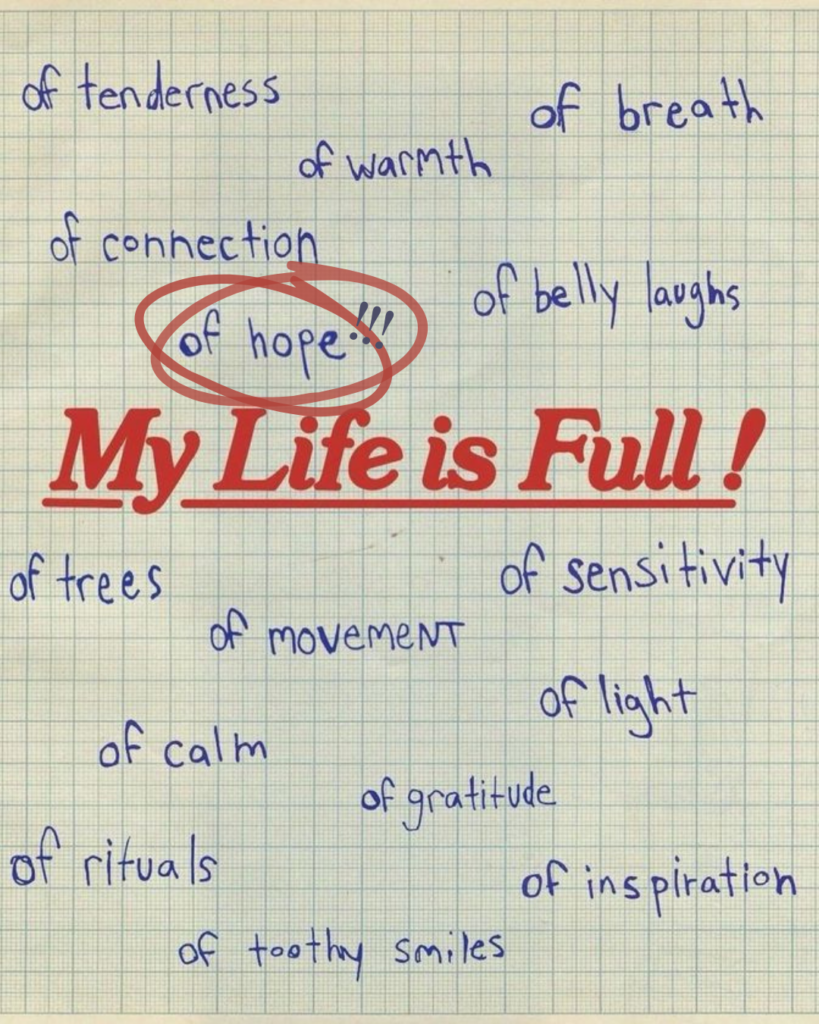
  • Why Hope Is Not Naive — It’s Necessary

    Hope as a Psychological and Social Resource

    When we think about hope, often the conversation revolves around spiritual concepts; however, hope can be a psychological and social resource that improves well-being when facing adversity, despair, uncertainty, and/or grief. As our name shows, hope is rooted in our foundation as a charity organization, in our family trajectory, and in the challenges that have come throughout the years. 

    Therefore, when we talk about hope, we consider it a necessary tool for moving forward when life places bumps in the way. For Richard Lazarus (1999), “to hope is to believe that something positive, which does not presently apply to one’s life, could still materialize, and so we yearn for it.” ; which means that it is the tool that glues everything together when nothing is left, and if you choose to believe it, a more positive outcome can be possible, not because of magic, but because the decision-making process tends to be more proactive. 

    Hope and Research

    Cognitively, “hope can be defined as goal-directed thinking. It is characterized by the ability to find routes that lead to desired goals and thoughts, with the motivation needed to reach those routes”  (Hartmann J. et al. 2018). This neurobiological process takes shape when parts of the brain, such as the prefrontal cortex, which takes care of the planning/goal-setting, and the anterior cingulate cortex, which manages motivation and monitoring progress, are activated.

    Therefore, hope can be established as a tool that we can learn to implement when experiencing life, in fact, an experimental study found in the National Library of Medicine called “Hope as a behavior and cognitive process: A new clinical strategy about mental health’s prevention” concludes that hope facilitates behavioral and cognitive reinforcement for elderly people, and that they are more likely to take initiatives, pursue their goals, and remain steadfast on their choices, or, have the flexibility to change them if necessary. 

    It seemed important to highlight the cognitive and psychological side of hope because it is a process we can find within us. The possibilities, the diversity of options, and the course of action for a lighter path are perceived when facing a personal journey that requires the creativity of seeing other points of view. 

    Our View on Hope

    “Hope is everything” were the last words that Sarah—our first hope angel in this project, said before leaving this world. She knew how, even though she had a short life, to live every moment to the fullest: writing poems, sharing love, and spending time with her loved ones. She understood that the only way for a person to see what is on the other side is by finding hope. 

    Sarah exercised some of the ways hope is improved in our daily life: finding community — people who understand or can relate to struggles, clinging to small moments in life that serve as a reminder of the essence of what it means to live, practicing gratitude, setting goals, and practicing mindfulness or meditation by doing enjoyable things. These are tools available to whoever is reading this. 

    More than a charity organization, we are a community. We understand what it means to live through struggle and how life can feel too heavy to keep going. Whether you are searching for hope or wanting to bring more of it into a world that is clearly begging for it, you can become a Hope Angel.

    For more information about contacting us and being part of Hope Is Everything, please click here. 

    References

    Lazarus, R. S. (1999). Hope: An Emotion and a Vital Coping Resource Against Despair. Social Research, 66(2), 653–678. http://www.jstor.org/stable/40971343

    Hartmann JAS Júnior, Fernandes ALAF, Medeiros AGAP, Vasconcelos CAC, Pinheiro KSCB, Amorim LLL, Queiroga MFS, Cruz MRCD, Araújo RCT, Neto MLR. Hope as a behavior and cognitive process: A new clinical strategy about mental health’s prevention. Medicine (Baltimore). 2018 Sep;97(36):e12130. doi: 10.1097/MD.0000000000012130. PMID: 30200101; PMCID: PMC6133436.

    — Written by Ariadna Bermudez, Freelance Blog Writer