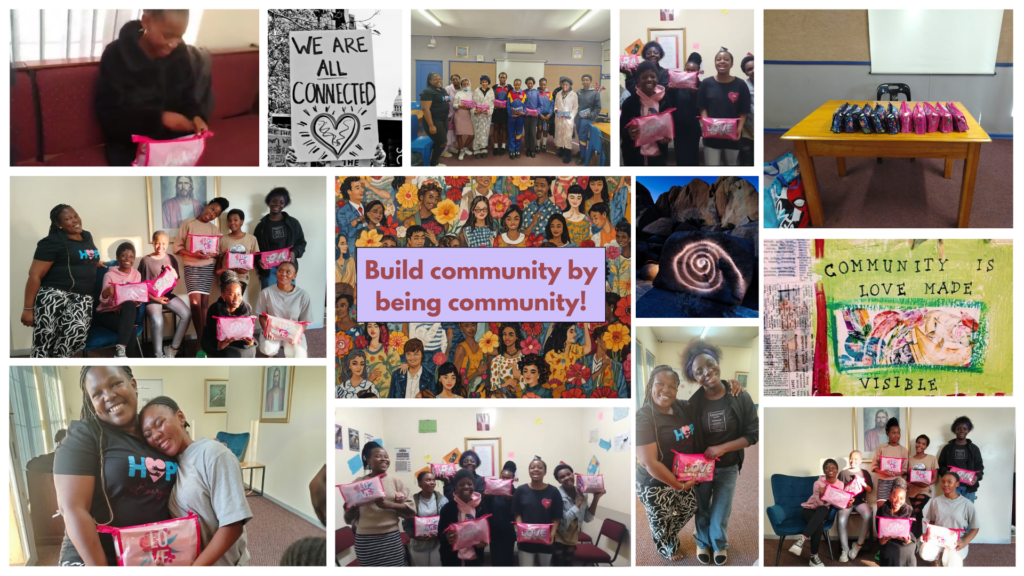
One of our most powerful experiences at Hope is Everything: the visits to Nigeria and South Africa. We spent time with young girls in vulnerable communities and shared resources that opened the door for a healthier and more educated life. As we reflected on this experience, we wanted to share some facts about what life is like for women and young girls in Nigeria and South Africa, and why it is pertinent for organizations like ours to bring attention to these realities, as well as any other areas in the world where access to education and healthcare remains scarce.
Research That Showcases Realities
According to statistics from UNESCO, “in 2018, the literacy rate of females aged 15 and above in Nigeria was only 52.65%, which was about 18.6% below the literacy rate for males aged 15 and above. Even though primary education is officially free and compulsory, about 10.5 million of the country’s children aged 5-14 years are not in school, disproportionately affecting more girls than boys.” Although the government has implemented measures to make education more accessible for women and girls than before, there is still a gap that shows the fact that the problem is not only policy-based but systemic.
On the same note, an article by Sage Journals states that “a qualitative research carried out by Enyioko (2021), revealed factors such as religion, poor education among parents/guardians and poverty as the major challenges limiting female education in Nigeria.” This highlights the variety of factors that composes a system that frames women’s education as a “threat”, when research consistently shows the opposite.
In a Girls No Brides report, it was found that “A 2017 World Bank/ICRW study estimated that ending child marriage could generate Nigeria an additional USD7.6 billion in earnings and productivity.” Currently, 30.3% of girls in Nigeria marry or enter a union before age 18, and 12.3% marry before age 15.
When We Choose To Look
These are statistics that remind us of the importance of recognizing the power we hold as a community and organization when bringing support to any space. It is not only awareness of global issues and dynamics, but also a deep commitment to knowing that every heart touched is a contribution to a better world. One with more hope and love.
Being immersed in the realities that people in vulnerable communities face can be uncomfortable, as it exposes us to different ways of living that privilege usually (and naturally) does not allow us to see; however, this discomfort is necessary to bring meaningful and proper support when the opportunity arises.
For more information on how to contact us and be a part of Hope Is Everything, please click here.
References
Nwachukwu, C., & others. (2022). Underscoring the Relationship Between Education for Women and National Development in Nigeria. SAGE Open, 12(2). https://journals.sagepub.com/doi/10.1177/21582440221102429
United Nations Educational, Scientific and Cultural Organization. (2020, September 7). Lives resumed by education: The second-chance education for women and girls in Nigeria. UNESCO. https://www.unesco.org/en/articles/lives-resumed-education-second-chance-education-women-and-girls-nigeria
— Written by Ariadna Bermudez, Freelance Blog Writer